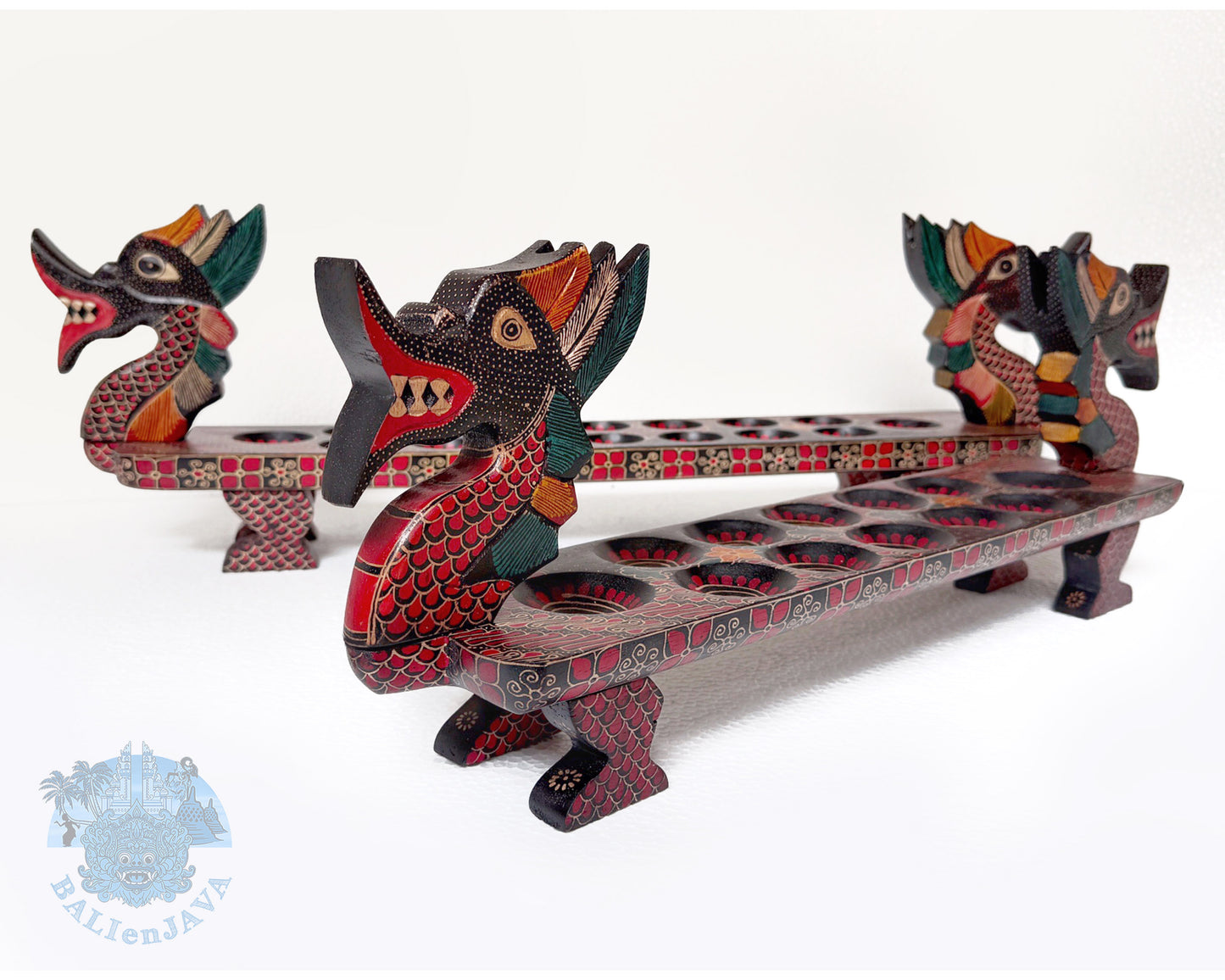
Dragon Mancala Board Game, 7 Holes Sungka – Handmade Gift
Dragon Mancala Board Game, 7 Holes Sungka – Handmade Gift


Couldn't load pickup availability
Product Description
Product Description
This is a 7-holes mancala board game shaped like a dragon, with detachable parts and a hand-painted batik (wax-resist) design on the wood surface. Each piece is individually hand-painted. It functions both as a playable strategy game for family game night and as a standalone decorative piece when not in use. Recommended for ages 8+
Important Information
- Safety: ⚠️ CHOKING HAZARD – children under 8 years must be under adult supervision while playing this game.
- Pricing & customs: the listed price excludes any sales tax and import costs. The buyer is responsible for the additional duties or taxes that may incur.
What's Included
- Dragon-shaped mancala board with detachable parts
- Free cowrie seashells, included as the game's playing seeds
Download the Mancala Playing Instructions here
Who This Mancala Is Best For
- Board game enthusiasts looking for a unique, artisan-made mancala set
- Buyers who want a game that also works as a decorative piece when not in play
- Gift-givers looking for a handcrafted item with cultural/craft significance
- Families wanting a classic strategy game for game night (ages 8+)
- Collectors of Asian artisan crafts
About Batik
Batik, a traditional art from Java, uses a wax-resist dyeing technique. This technique has been practised for centuries. The word batik comes from the Javanese amba ("to write") and titik ("dots or points"), reflecting its detailed craftsmanship.
Batik tulis is the oldest form of batik making, where the wax is written or drawn (tulis) onto a length of fabric. Inspired by this timeless technique, we’ve applied the same intricate process to the wood surface of our mancala board games.
The batik-making process involves three key stages:
- Mencanting – Wax is applied using a canting tool to create intricate patterns.
- Mewarna – The fabric is dyed, with waxed areas resisting color
- Finishing – The fabric is dried and soaked in a fixing agent to preserve the colors.
Dimensions
Dimensions
31.5″ x 6.7″ x 2.3″ (inches) / 80 x 17 x 6 cm
Features
Features
- Players: 2 players
- Age: Recommended for ages 8 and up; adult supervision required for younger children
- Dual function: Playable game + home decor piece when not in use
- Related product: 5-holes dragon mancala
- Authentic craftsmanship. Slight variations in pattern are the mark of a genuine handmade piece.
Material
Material
Wood
Share